Sports park Kenn: feasibility study
4 min read
What can an existing sports field become?
A football field is often understood as a single purpose space. But what happens when we look beyond the pitch?
For the sports park Kenn, Metaform developed a feasibility study exploring how an existing football field and its surrounding spaces could accommodate a wider range of sports, recreation and everyday activities. Rather than expanding the site with a collection of separate facilities, the study looks at how existing conditions and underused areas could be reorganised to create a more diverse and connected sports park.
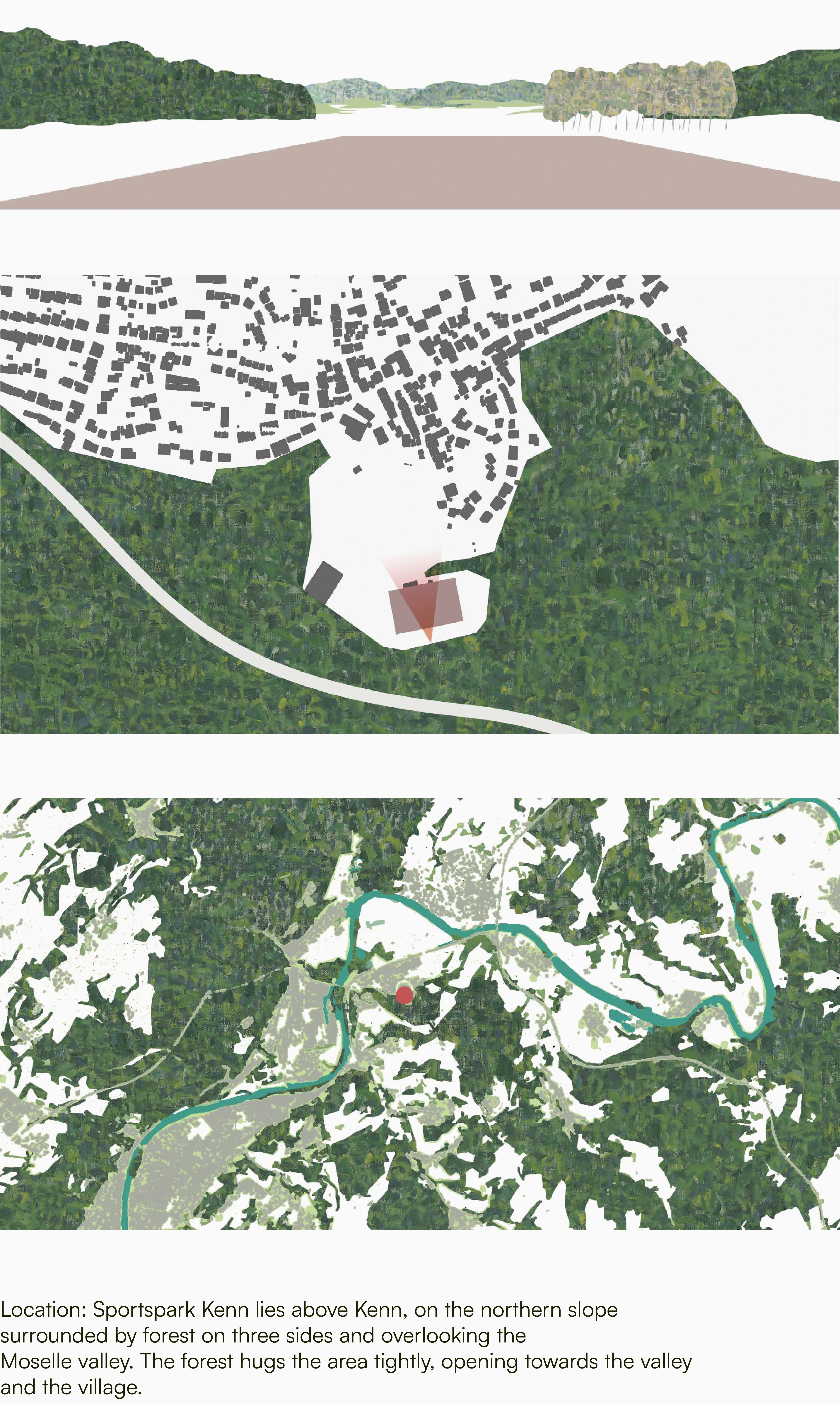
The starting point is the existing football field, its orientation, its relationship to the surrounding terraces and its close proximity to the forest. These conditions become opportunities to rethink how the site could work as a whole.
Making room for more
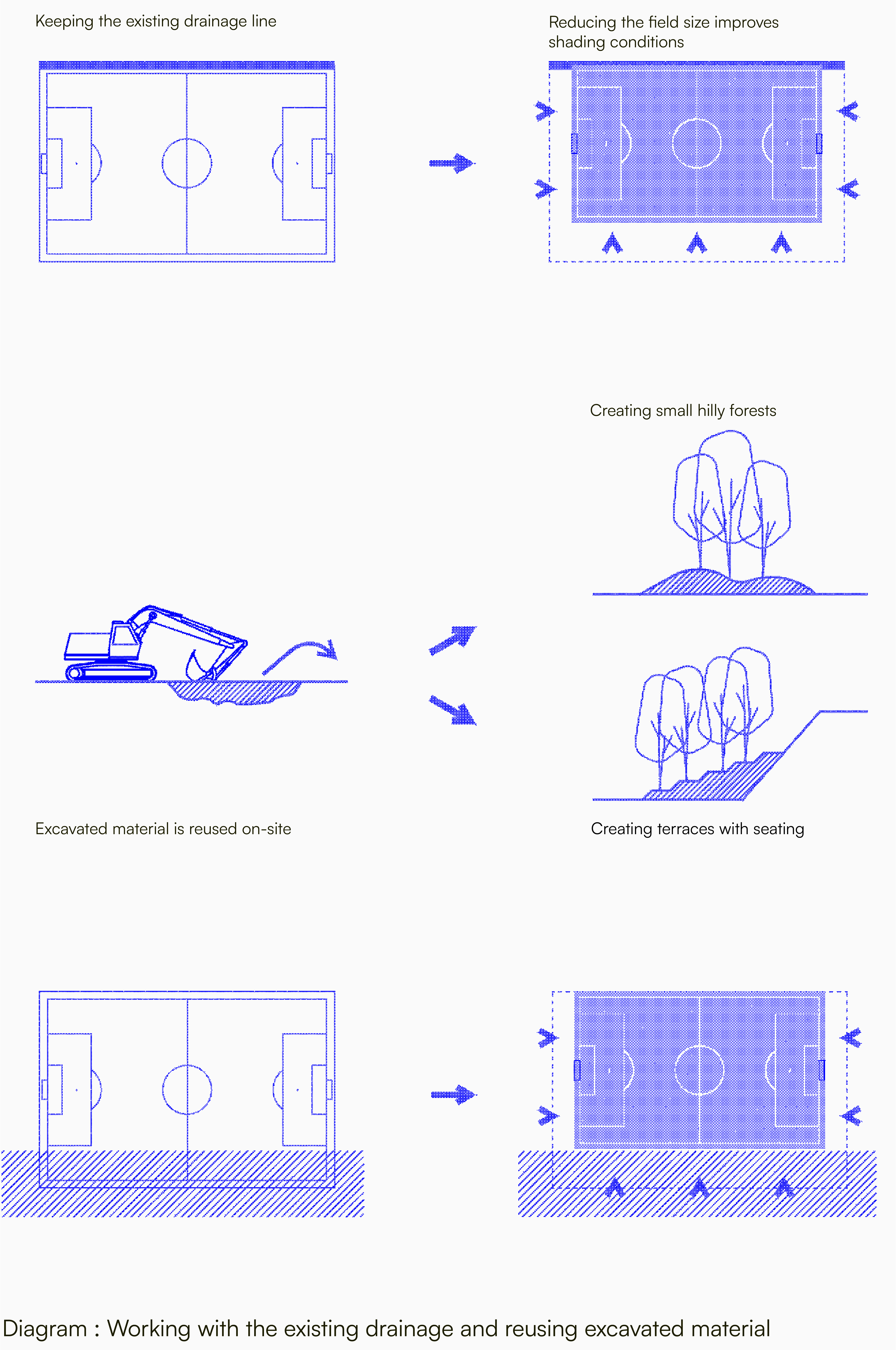
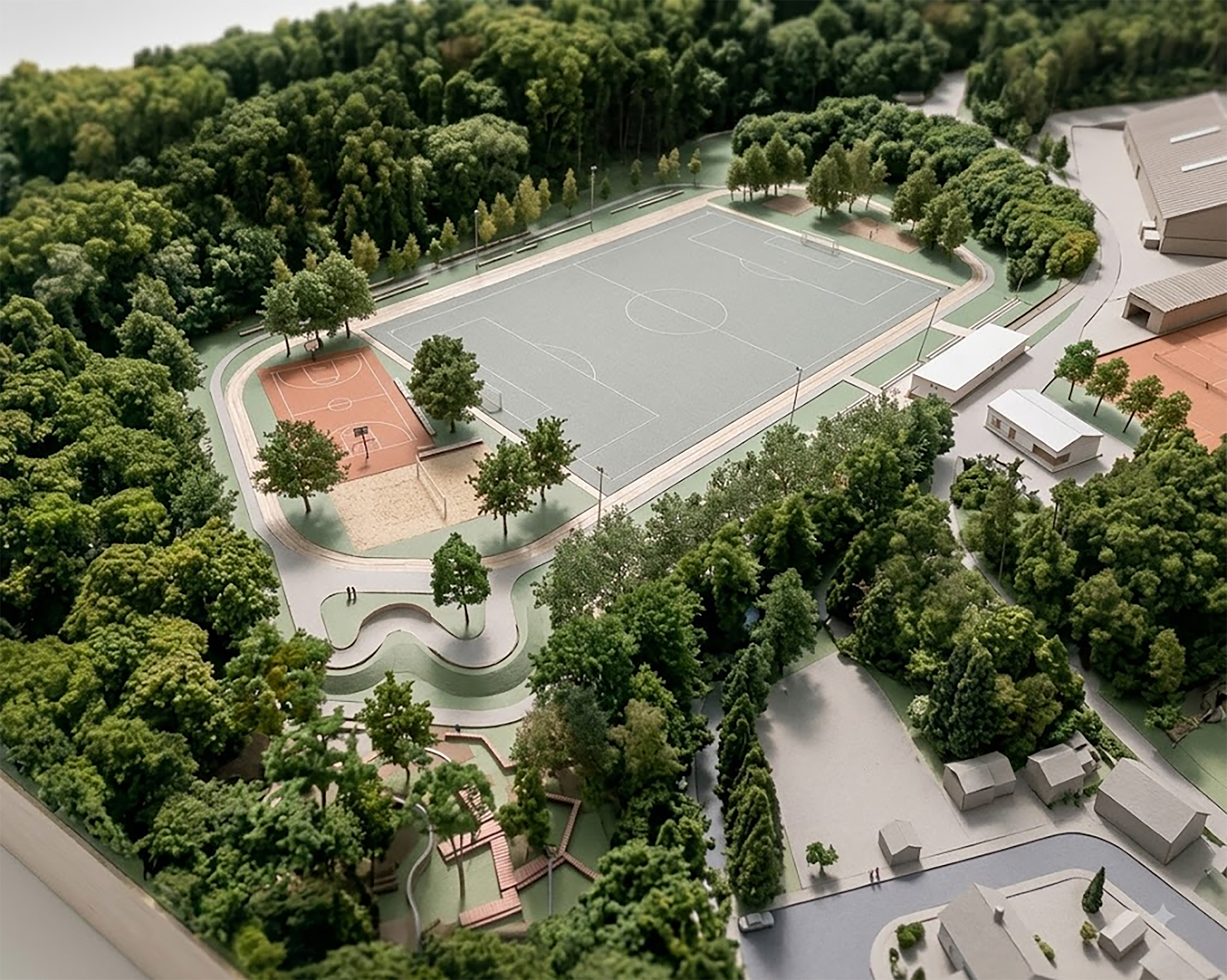
One of the key ideas is to slightly reduce the existing football field to 90 x 55 metres. This would improve the existing shadow conditions while freeing space for terraces, informal seating and additional activities.
The study explores a broader programme around the football field, including running, street basketball, beach volleyball, outdoor fitness, yoga, calisthenics, a pump track, table tennis and an extended playground. A continuous loop connects these different areas, allowing the sports park to work as a sequence of spaces rather than a collection of isolated facilities.
The football field remains central, but it is no longer the only reason to use the site.
Connecting sport, play and landscape
The existing playground occupies a lower terrace and is currently disconnected from the sports field above. The study explores how this relationship could be transformed through stairs, terraces, slides and climbing elements.
The slope itself becomes part of the playground and part of the connection between levels. Movement through the site can therefore become an activity in its own right, linking sport and play with places to sit, meet and gather.
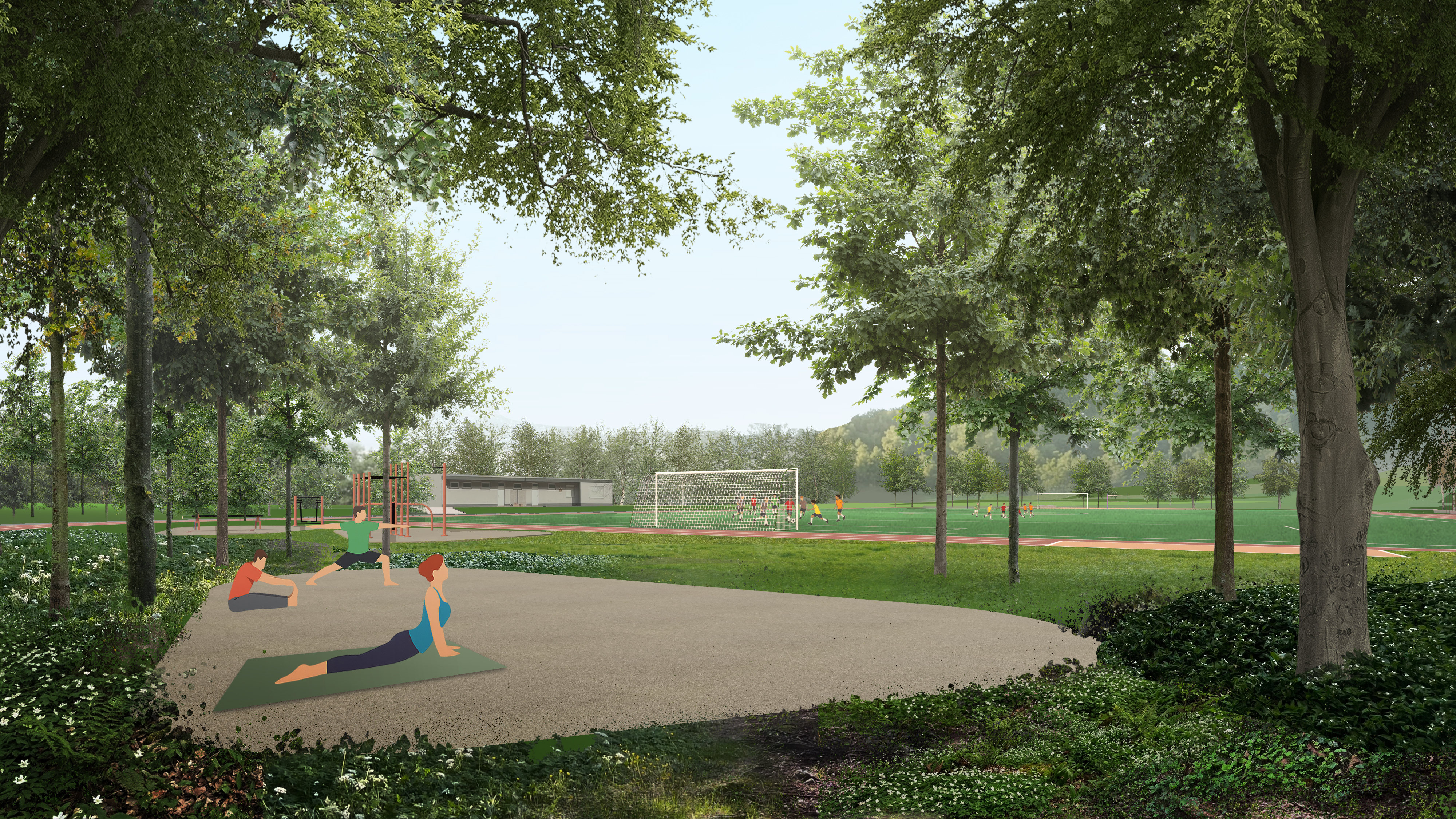
The different programmes are also given different spatial conditions. More active uses such as street basketball, beach volleyball and the pump track are concentrated in the eastern part of the site, while quieter activities such as yoga, calisthenics and fitness are placed within the lighter shade of an oak grove.
Bringing the forest into the park
The surrounding forest is one of the defining characteristics of the site. Rather than treating it as a backdrop, the study explores how its presence could be brought further into the sports park.
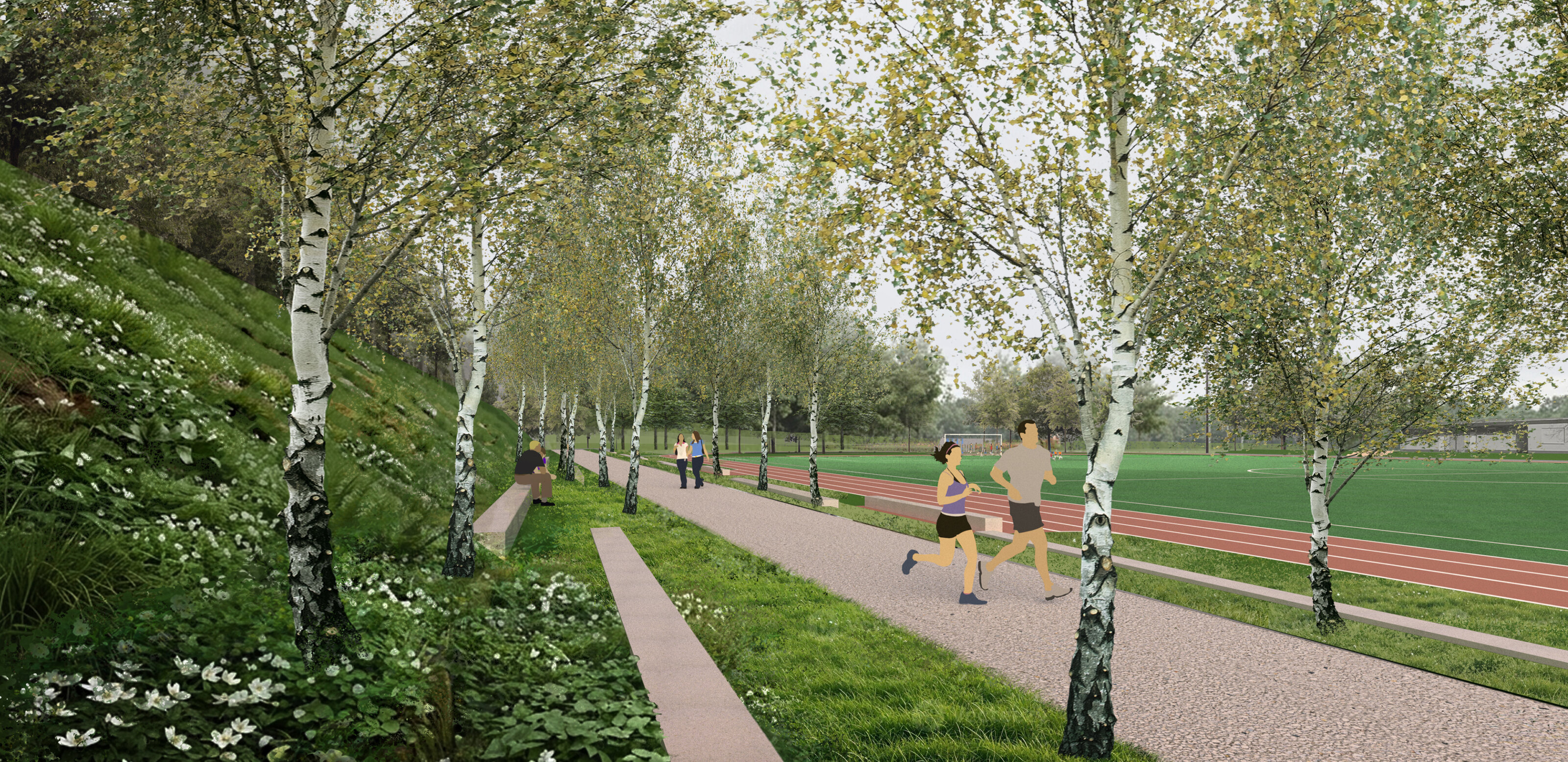
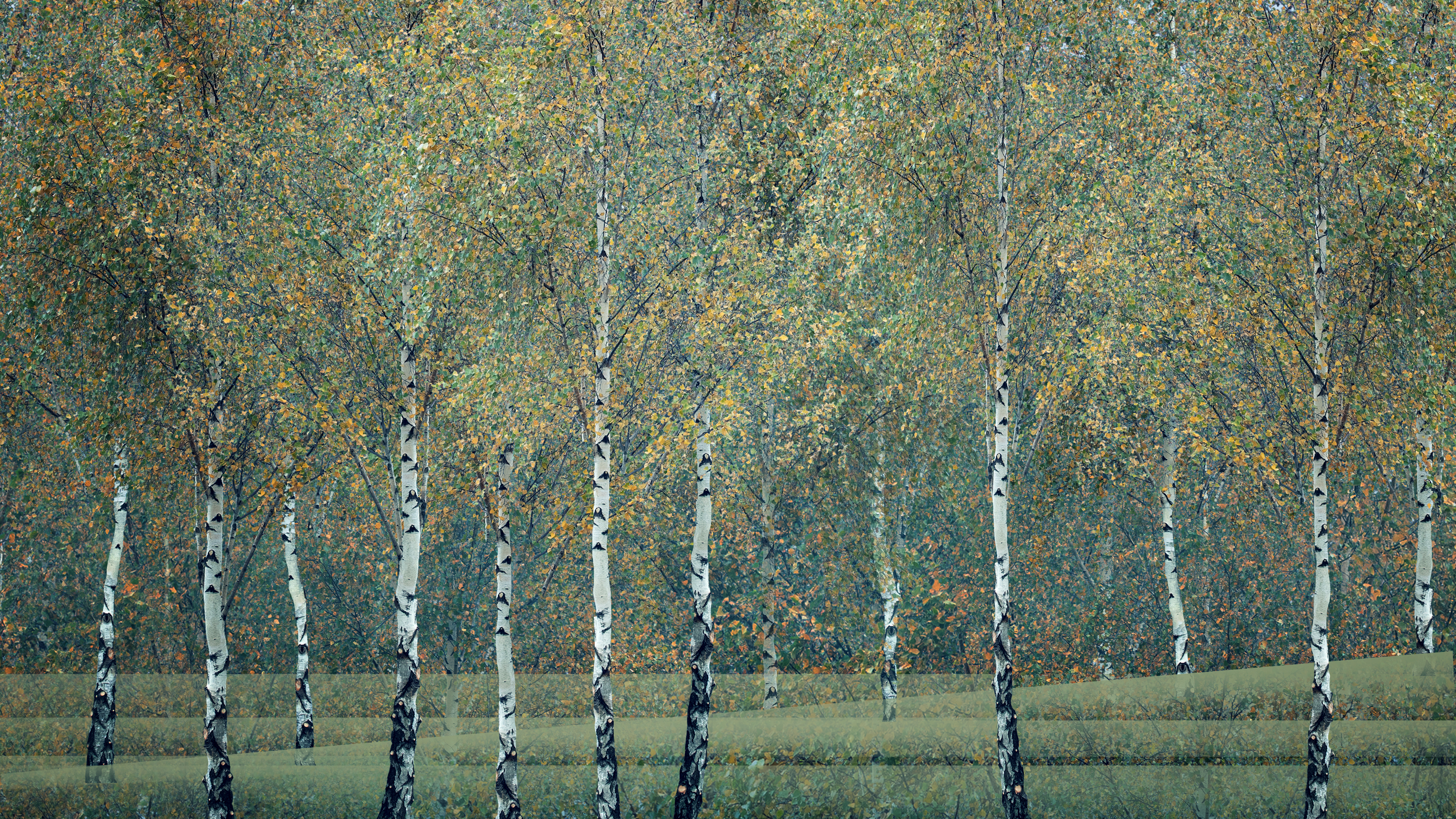
Planting becomes a way of structuring the site and creating different atmospheres. Light, permeable stands of silver birch could create a bright, dappled setting around the tribunes. Denser compositions of beech and oak could form calmer and more enclosed environments for quieter activities. Elsewhere, smaller groups of trees could provide shade and structure around active areas such as street basketball and beach volleyball.
Together, these different planting conditions create a sequence of what could be described as forest rooms, moving from open and social spaces towards more shaded and contemplative environments.
From green surface to living landscape
The planting strategy also considers the ecological potential of the site.
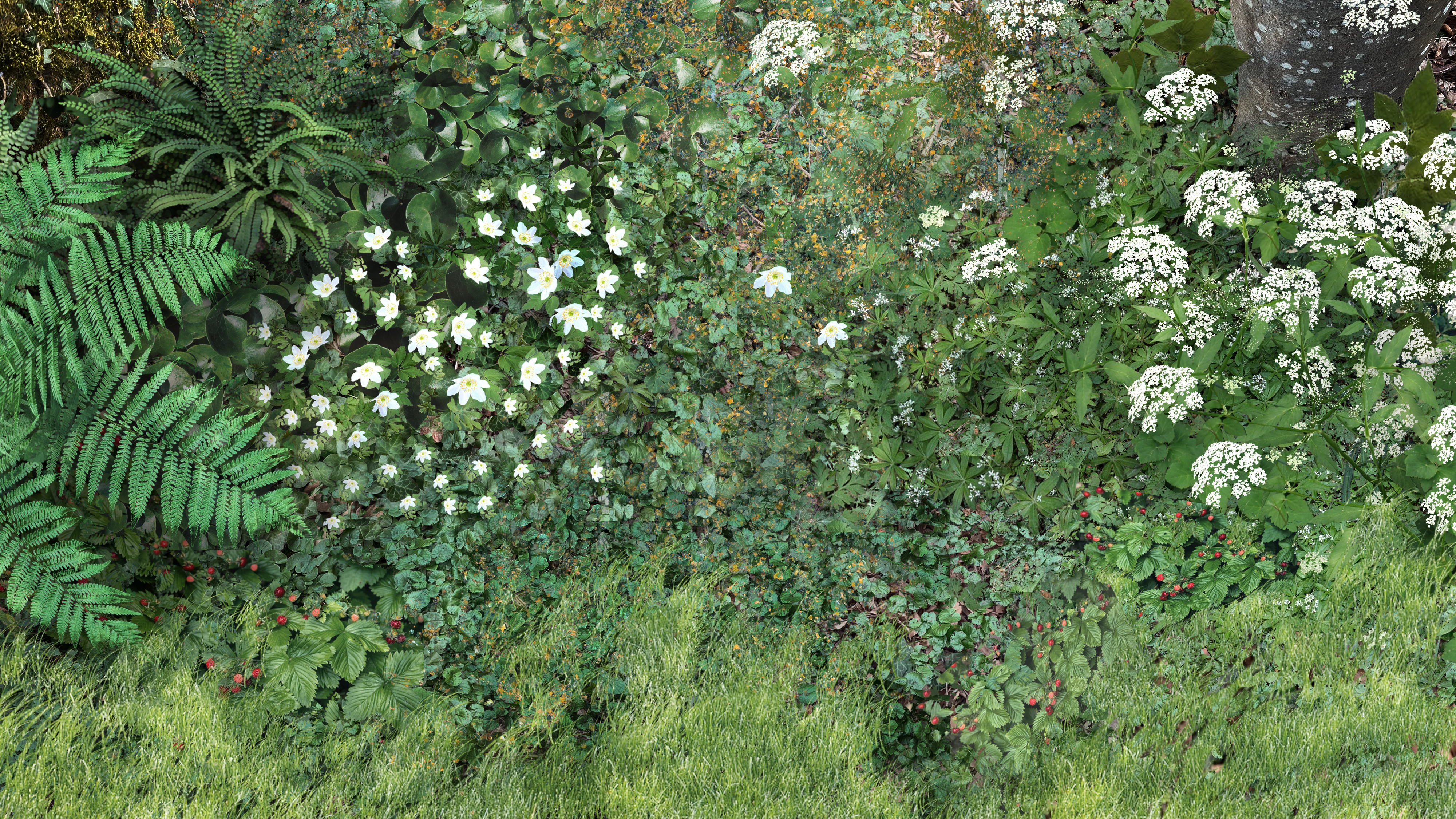
The selected species are inspired by local plant communities and characteristic Central European deciduous forests. Compared with intensively mown grass, a layered structure of canopy, understory and ground vegetation can support a wider range of habitats and ecological interactions.
The study also considers the role of planting in improving water infiltration, stabilising soil and buffering temperature extremes. In this sense, the forest is not simply an aesthetic addition to the sports park. It becomes part of its environmental performance and spatial structure.
Working with what is already there
The feasibility study also looks at how the existing site and its materials could be used more efficiently. The proposed adjustment to the football field retains the existing drainage line, while excavated material could be reused on site to form terraces and small hills for new forest planting.
Rather than starting with a blank site, the study works through what is already present: the football field, the terraces, the slope, the playground and the surrounding forest.
Sports park Kenn is ultimately an exploration of how an existing sports facility could become something more diverse without losing its original purpose. By bringing together sport, play, landscape and planting, the study asks how much more a football field and its surrounding spaces could offer when considered as one connected environment.